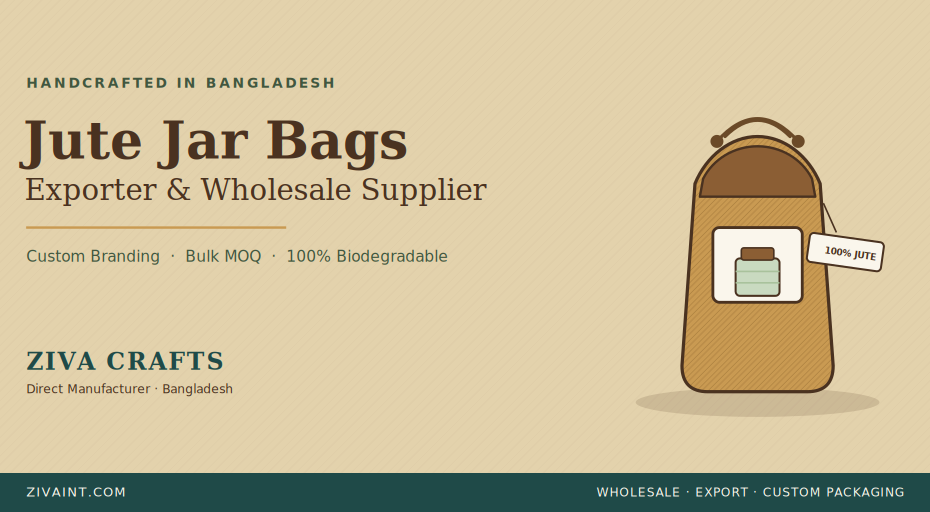
Jute jar bags are reusable fabric-style covers designed to hold or present jars for gifting, retail display and promotional packaging. For international buyers, the right bag depends on the jar’s dimensions, weight, intended presentation and how the finished item will be packed for shipment. This guide explains how to specify wholesale jute jar bags from Bangladesh and what to confirm before placing a custom order.
What is a jute jar bag?
A jute jar bag is a small bag or sleeve made with jute-based fabric, often finished with a drawstring, handle or decorative detail. It can be used to present jars containing candles, preserves, honey or gift items, subject to the suitability of the packaging for the intended product. The bag is usually an outer presentation component; buyers should not assume it provides a food-contact barrier, tamper protection or leak resistance.
Choose dimensions from the actual jar
Provide the jar’s height, diameter and shape, including any lid or shoulder that affects fit. A jar with a wide lid may need a larger opening than its body suggests. Buyers should also consider whether the jar should sit completely inside the bag or remain partly visible. Ask for the finished bag dimensions and tolerances rather than ordering from a photograph alone.
Fabric, construction and finishing
Jute fabrics differ in weave density, feel and appearance. Depending on the design, a bag may need lining, reinforced seams, a stable base or a closure that remains secure when carried. Decorative cords, labels and trims should be checked for attachment quality and suitability for the destination market. Because natural fibers can vary in shade and texture, agree in advance on the acceptable range of handmade variation.
Branding for retail and promotional orders
Custom jute jar bags can support seasonal collections, gift packaging and brand promotions. Common design requests include printed logos, woven labels, hangtags, custom colors and decorative closures. The appropriate technique depends on artwork, fabric texture, order size and budget. Supply vector artwork where possible and request a sample showing the real printing or labeling method before approving bulk production.
Sampling and quality checks
A useful sample should be tested with the exact jar it is intended to hold. Check the opening, overall fit, seam strength, closure, surface finish and presentation. For handled designs, assess whether the construction is appropriate for the filled jar’s weight. Bulk inspection criteria can include measurements, stitching, stains, loose fibers, print placement, label accuracy and carton counts. Document any agreed changes to the approved sample.
MOQ, pricing and export packing
Minimum order quantities and quotations depend on size, fabric, customization, finishing and packing requirements. Ask suppliers to identify whether sample charges, artwork setup, individual packaging and export cartons are included. Confirm production lead time after the design is approved. For freight planning, request the units per carton, carton measurements and estimated weights; the jars themselves may be supplied separately from the bags.
Request a custom wholesale quotation
When contacting a supplier, share the jar dimensions, reference design, target quantity, branding artwork, packaging preference and destination country. Clear specifications make it easier to compare quotations and reduce revisions. Explore the Ziva Crafts jar bag range and send a product inquiry for a review of your requirements. Availability, customization options and shipment terms should be confirmed for each order rather than assumed.